
Castle Hill Lighthouse
Newport, RI
CASTLE HILL
A BRIEF SUMMARY OF CASTLE HILL
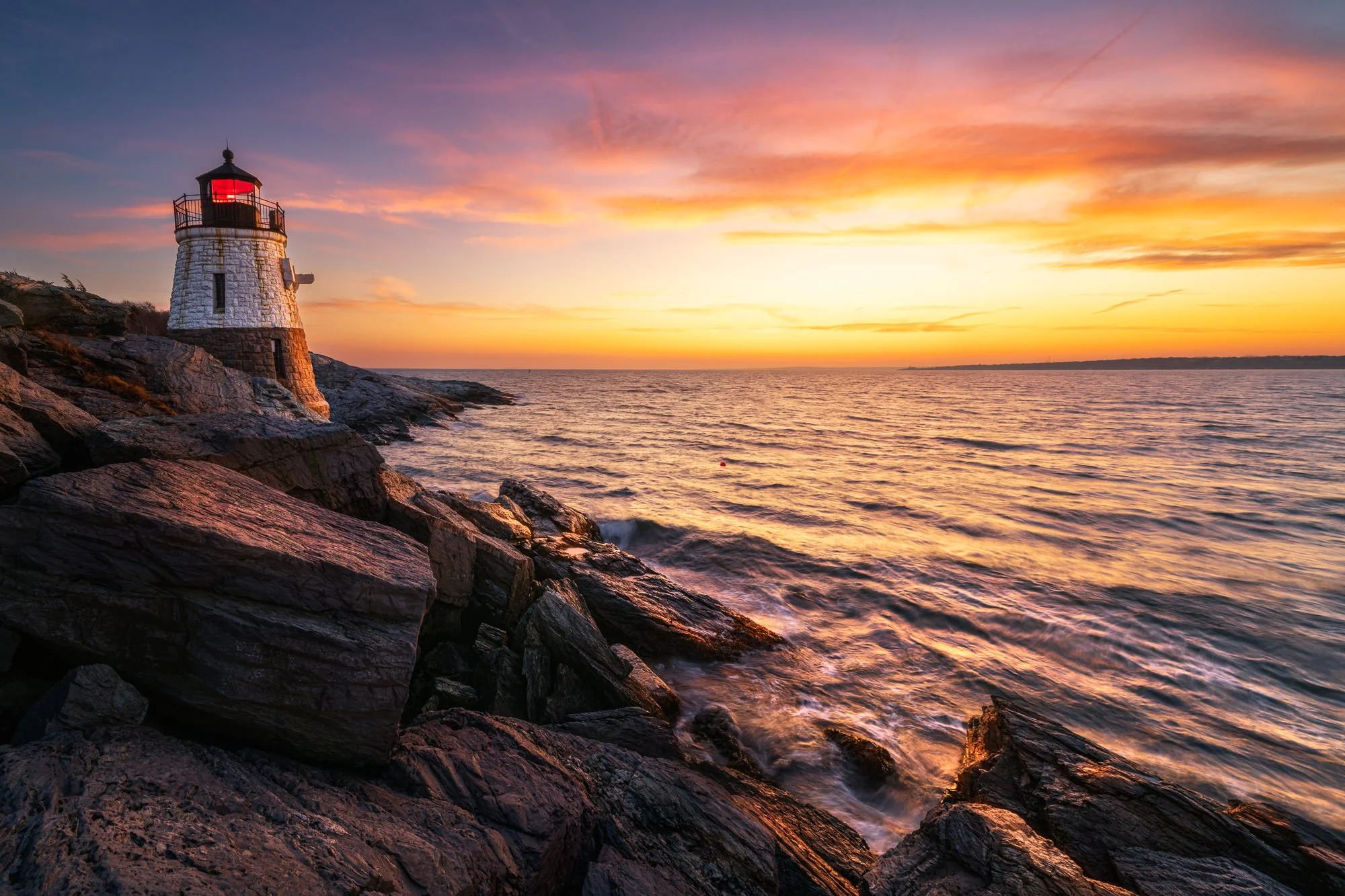
This is one of the smallest but most scenic lighthouses in Rhode Island. Built in 1890 and still an active navigation aid for vessels in the Narragansett Bay, the lighthouse is not open, but the rocks and surrounding grounds are easily accessible.
Despite being located in a popular tourist town, this small lighthouse is somewhat off the average tourist’s radar. Multiple composition opportunities and the changing direction of the sun make this a location that can be visited multiple times throughout the year. Bring a wide-angle lens and plan on arriving at least an hour before sunset.
Photos and location summary by Matt Reynolds

Annual Subscription
Lifetime Membership
DATA POINTS INCLUDED WITH CASTLE HILL SUMMARY
I would rate the difficulty of this trail a 1-2 on a scale of 1-5 (with 5 being most difficult). The distance from the parking lot to the lighthouse is less than 1/4 mile but can become quite muddy after a recent rain or snowfall. There are steps going down to the lighthouse or you can hike to the left or right - both may requiring some rock scrambling.
The only difficulty or danger is if you choose to venture onto the rocks beyond the lighthouse. These rocks are jagged and next to the ocean, so be careful. Proper footwear is required. While the rocks usually are not particularly slick, the closer to the water’s edge you go, the more chance you take and a fall into the ocean here could be disastrous.
Make sure to arrive in advance of sunset with enough time to scout a composition on the rocks. The tide is not a big factor here, but each day will bring about changes in appearance based on where the water is reaching and the power (or calmness) of the sea that day.
Try to incorporate the action of the ocean against the rocks. To do so, you need to be on site to see what works best for a given sunset. Getting as low as possible is not always the best answer - as the way the lighthouse is built into the rock can obstruct your view. If you are too low, move to the left of the lighthouse. The height of your tripod can also change the look of the shot when using an ultra-wide lens. Experiment with different prospectives before settling on one. Ideally, you can find a location where the direction of the pointing rocks and / or splashing waves contribute to your composition (while standing in a safe place for you or your gear). Your best chance to capture water on the rocks is when the waves are receding.
A certain tidal situation which can create a special photographic opportunity for the left side of the lighthouse. After a high tide recedes, the ocean can leave small pools of water in the rocks. These pools can make for a great foreground and also a reflection opportunity for the red light. Something else to scout before settling on a composition. If you do happen upon an ideally placed pool, this would be a great time to experiment …
This location is best using an ultra wide to wide angle lens (12mm - 35mm).
The lighthouse is relatively small - and due to the way it is built into the rocks, you need to be fairly close to the lighthouse to capture it. If you move further back, you can capture the top of the lighthouse, but the base will be obscured. A super wide-angle lens will allow you to get close to the lighthouse, but still include the surrounding rocks and water. I would recommend a 12-24mm, 14-24mm, 16-35mm or similar range prime lens …
Sea Level Ft. Elevation
Other Resources Available with Membership
Detailed Directions
Best Time of Day to Shoot
Best Time of Year to Shoot
Equipment Needed
Required Permits
KMZ Trail File
Direction of Shot
Google Maps Birds-Eye-View
Number of Photographers to Expect
Cell Service
Current Weather
Lodging & Camping
Area Guides and Workshops
Other Resources
LOCATION SUMMARIES WRITTEN BY PROFESSIONAL PHOTOGRAPHERS


